Prepared for Margaret · by Dr. John Frey · Frey Family Dentistry
Margaret, here is what we found – and what we can do about it.
You mentioned the ache when you bite down on the lower left. We took a careful look, and I want to walk you through it the way I would across the kitchen table – in plain English, with honest numbers, and with time to decide. Nothing here needs to be settled today.
What is happening in your mouth
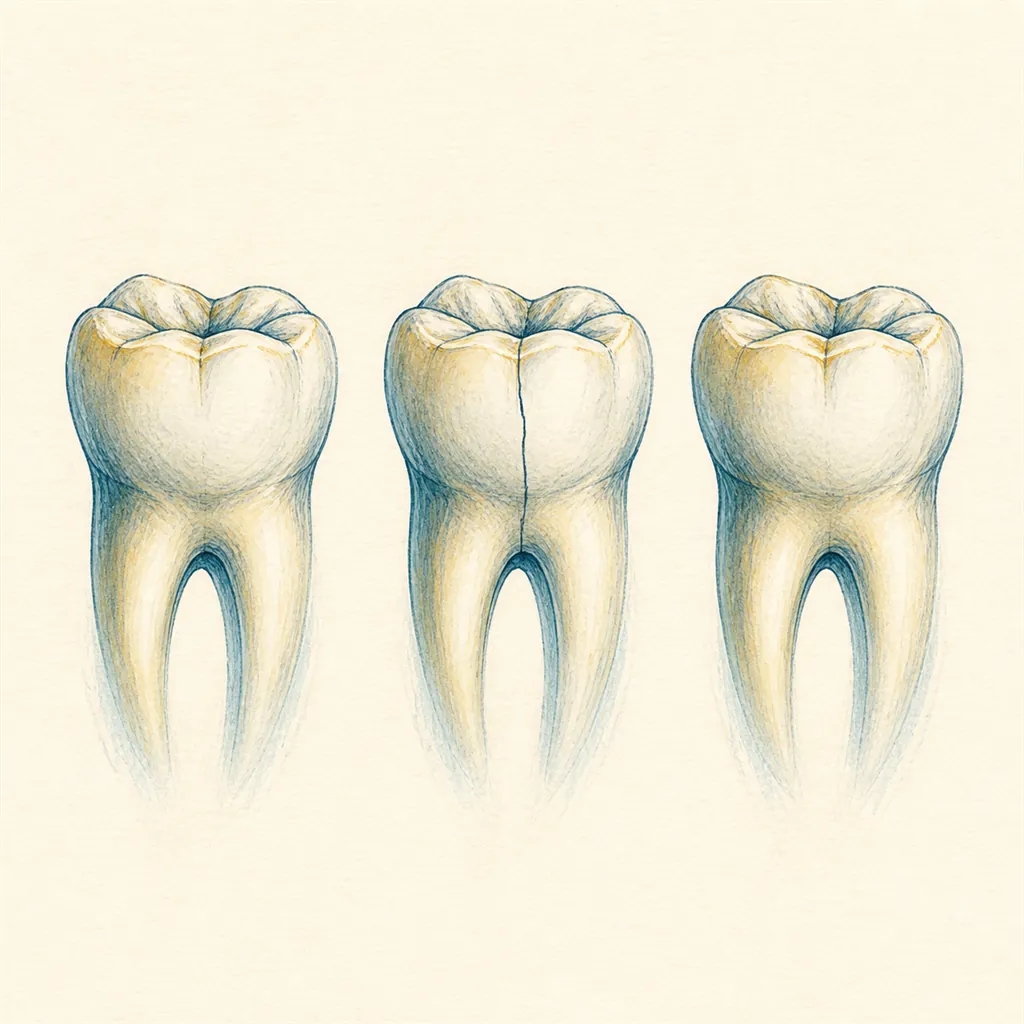
Your lower left molar. The fine line is the crack.
One of your back molars – the workhorse tooth that does most of your chewing – has developed a hairline crack. It runs from the top of the tooth down toward the root. Right now the crack is shallow. That is why the ache comes and goes instead of staying.
Two of the large silver fillings nearby are also showing their age. They were good work in their day, but after twenty-plus years the seal around their edges is wearing open, and a worn seal lets decay start quietly underneath.
Your gums along that side are a little inflamed – tender, quicker to bleed. This is early and reversible.
Why timing matters here
A cracked tooth never heals on its own; teeth cannot knit the way bone does. Chewing works the crack the way bending works a paperclip. If it spreads slowly, we crown the tooth and keep it. If it spreads into the root, the tooth cannot be saved, and the conversation changes from protecting a tooth to replacing one. I cannot tell you when that would happen – only that every month of hard chewing is a roll of the dice.
Your three paths
01
Path one – protect the cracked tooth now
We fit a crown over the molar. A crown wraps the tooth and holds it together, the way a barrel hoop holds staves. Two visits, about three weeks apart. The fillings and gums we watch at your regular cleanings.
Sample fee: $1,450. Most insurance plans cover a meaningful part of a crown; Shelly will get you exact numbers before you commit to anything.
02
Path two – the whole picture, in stages
Everything above, spread over about six months so neither your calendar nor your budget takes one big hit:
The crown first – it is the urgent piece. ($1,450)
A deeper cleaning along the inflamed side, then a re-check. ($390)
The two aging fillings replaced with bonded tooth-colored ones, one visit each. ($680 each)
Sample total: $3,200, phased. This is the plan I would choose for my own mouth, and the order matters: urgent first, everything else on a humane schedule.
03
Path three – if the crack has gone too deep
If we open the tooth and find the crack has reached the root, a crown will not save it. The honest course then is to remove the tooth and replace it with an implant – a titanium root with a porcelain tooth on top. It is the best replacement dentistry has, and it is also the most involved: several months start to finish, most of it quiet healing time.
Sample fee: $5,900. I mention this path now so no outcome surprises you, and so the numbers are on the table before we begin rather than after.
What happens next
Take your time with this page. Show it to Tom. Write questions in the margins. When you are ready, call Shelly at 616-222-0202 and she will find you a time – or simply bring your questions to your cleaning in March. If you would like a second opinion before deciding, I will send your records the same day you ask. That offer is genuine.
A word from Dr. Frey
Margaret, you have been coming to us for nine years, and my goal is that this tooth is still chewing for you in twenty more. I put the honest case in front of you the way I would for my own family. Whatever pace you choose, we will take good care of you.
– John Frey, DDS
Sample presentation – fictional patient · Frey Family Dentistry